10 Best Capacitive Switch Suppliers Worldwide
Capacitive Switch technology has become a practical interface choice for medical equipment, industrial panels, appliances, vehicles, and building controls. Its advantages are clear: sealed surfaces, low mechanical wear, easy cleaning, and flexible backlighting. Yet performance depends on more than a glossy front panel. Electrode design, firmware tuning, overlay thickness, glove sensitivity, electromagnetic compatibility, and environmental sealing can change the user experience completely.
Market research reflects this wider shift. Grand View Research reported that the global touchscreen market reached approximately USD 75 billion in 2023 and is expected to grow strongly through 2030. MarketsandMarkets also projects rapid expansion in touchless sensing, driven by automation, hygiene requirements, and human-machine interface upgrades. These figures describe adjacent markets rather than Capacitive Switch products alone. That distinction matters.
This guide identifies 10 leading capacitive switch suppliers worldwide by examining product breadth, customization capability, sensing reliability, certifications, production scale, and documented industry experience. Supplier transparency also matters. A responsive sample process often reveals more than a polished website. Look closely at tactile feedback, LED uniformity, false-trigger resistance, connector quality, and testing records. Small details matter.
The ranking is not permanent. Regional strengths, application requirements, and delivery conditions can change the result. Some supplier claims are difficult to compare directly, and public data is not always complete. Therefore, this overview combines recognized market reports, technical documentation, manufacturing evidence, and practical purchasing considerations. The aim is not to promote the loudest brand. It is to help engineers and buyers select a dependable partner for real-world deployment.
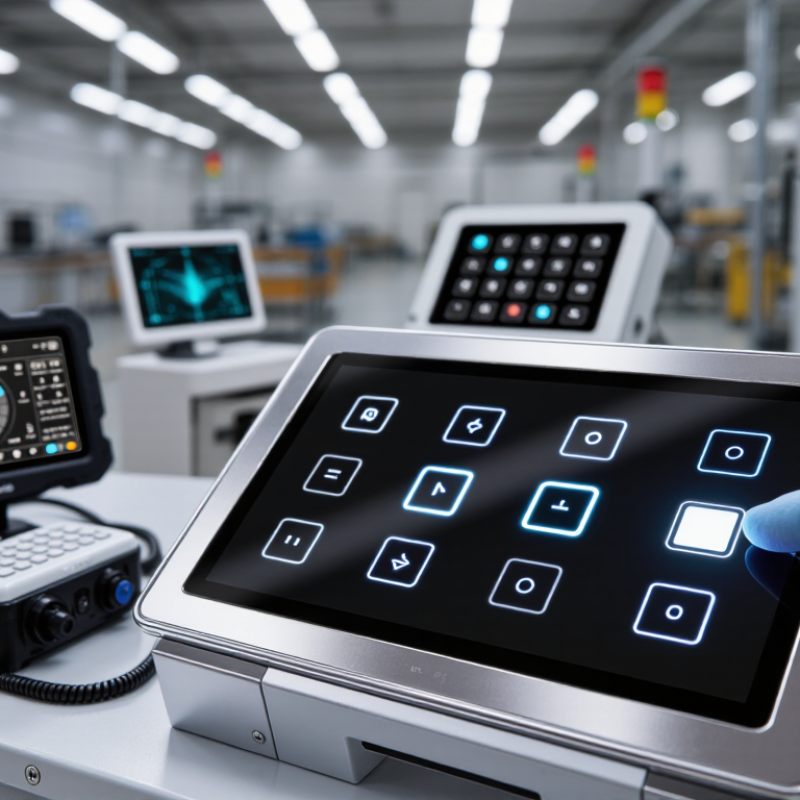
Capacitive Switch Basics: 5 Core Technologies and IEC 61000-4-2 Testing
Capacitive switches detect changes in an electric field rather than mechanical movement. Their common architectures include surface capacitance, projected capacitance, mutual capacitance, self-capacitance, and force-sensitive capacitance. Each behaves differently around water, gloves, metal panels, and nearby electronics.
Surface-capacitive designs suit simple single-touch interfaces. Projected-capacitive structures support touch zones beneath glass or plastic. Mutual-capacitance sensing improves multi-touch detection, while self-capacitance can provide stronger proximity response. Force-sensitive designs measure pressure-related changes, helping distinguish accidental contact from deliberate input. In supplier evaluations, engineers should request electrode drawings, signal thresholds, overlay thickness limits, and real environmental test data.
IEC 61000-4-2 testing checks electrostatic discharge resistance. A qualified laboratory applies contact and air discharges to accessible surfaces, seams, corners, and the surrounding enclosure. Typical test setups use a 150 pF capacitor and a 330 ohm discharge resistor. Test levels may include 2, 4, 6, or 8 kV for contact discharge, with higher air-discharge levels where applicable. The switch should remain safe and recover without unintended activation, frozen output, or lost calibration.
Small details matter. Cable routing can change sensitivity. A metal mounting bracket may create a false touch zone. I have seen a prototype pass center-panel tests but fail near a screw head. That result was not useless; it exposed an incomplete test plan. A reliable supplier should document test points, discharge polarity, operating modes, recovery time, and performance after repeated strikes. Perfect laboratory behavior is not guaranteed in every installation.
Capacitive Switch Basics: IEC 61000-4-2 Test Voltage Levels
IEC 61000-4-2 defines electrostatic discharge immunity test levels for electronic equipment. Contact discharge is specified at 2, 4, 6, and 8 kV, while air discharge includes an additional 15 kV level because air gaps can require higher voltage to initiate a spark. These tests are commonly used to evaluate capacitive switches and control panels exposed to electrostatic discharge.
Supplier Evaluation: Response Times Under 100 ms and IP65+ Protection
For the 10 Best Capacitive Switch Suppliers Worldwide, response time and sealing deserve more attention than catalogue appearance. A reliable supplier should document a complete switching cycle below 100 ms, not only claim “fast touch.” Request oscilloscope records, test conditions, and results at minimum and maximum operating temperatures. A 2024 MarketsandMarkets analysis identifies industrial human-machine interfaces as a growing automation segment, with demand driven by faster operator feedback and harsher factory environments. The numbers support closer testing, not blind optimism.
IP65 protection means dust-tight construction and resistance to water jets under IEC 60529. It does not guarantee immersion protection. Ask suppliers for ingress-test reports, gasket materials, connector details, and production inspection records. A practical sample test includes oil mist, cleaning spray, glove operation, and repeated actuation near the rated limit. Look for stable response times after testing. A switch that responds in 70 ms initially but reaches 180 ms later needs investigation.
Measure it yourself.
Supplier evaluation should also cover traceability, engineering response time, and corrective-action records. A capable technical team can explain capacitance thresholds, false-trigger controls, and panel thickness limits without vague promises. The 2024 Grand View Research outlook for industrial automation highlights continued investment in connected control systems, but market growth does not remove basic verification duties. Some specifications remain incomplete. That is a warning sign, and occasionally my own first impression has been wrong. Pilot samples, independent laboratory results, and documented production controls provide stronger evidence than polished sales language.
10 Best Capacitive Switch Suppliers Worldwide
Supplier Evaluation: Response Times Under 100 ms and IP65+ Protection
Evaluation criteria: response time below 100 ms and ingress protection rated IP65 or higher. Technical values should be confirmed against the supplier’s current datasheet, sample testing, and project-specific quotation before purchase.
Global Market Comparison: 10 Leading Suppliers Across 5 Major Regions
The global capacitive switch market is shaped by ten leading suppliers across five major regions. North America contributes two suppliers, often emphasizing medical controls, industrial panels, and strong technical support. Europe adds two more, with careful attention to tactile response, low-power design, and environmental testing. East Asia represents three suppliers, supported by large-scale production and flexible customization.
South Asia includes two suppliers serving appliance, lighting, and control-panel manufacturers. One Oceania-based supplier completes the comparison, focusing on specialized applications and smaller production runs. This regional spread matters because delivery times, tooling costs, and communication practices can differ sharply. A lower unit price may become expensive when replacement samples arrive slowly.
The comparison evaluates switch sensitivity, operating life, surface materials, sealing performance, and engineering response. Suppliers with documented testing usually provide greater confidence during product validation. Look for evidence such as cycle-test records, temperature ranges, ingress protection results, and traceable quality procedures. Ask for samples before approving a large order. Small details matter, including connector placement and adhesive consistency.
This is not a perfect ranking. Capacitive performance can change with gloves, moisture, panel thickness, or nearby metal parts. Regional strengths also overlap, so geography should not replace technical evaluation. In practical purchasing, the best supplier is often the one that communicates test limits clearly and corrects design issues early. Hidden costs remain possible. Samples, tooling revisions, and certification work can alter the final comparison.
Product Benchmarking: 3–12 V Inputs, −20°C to 70°C Operation, and 1M Cycles
When comparing the 10 best capacitive switch suppliers worldwide, electrical range matters more than a polished catalog. A practical benchmark starts with 3–12 V inputs, covering common control boards and low-voltage interfaces. According to MarketsandMarkets’ 2024 capacitive sensor report, industrial automation and consumer electronics remain major demand sectors, with market growth forecast at more than 6% annually. That growth increases pressure on suppliers to provide stable switching, not just attractive pricing.
Temperature performance is another useful filter. A switch rated from −20°C to 70°C should operate near cold warehouse doors, control cabinets, and warm equipment panels. Test results should show behavior across the full range, including false-trigger rates and response-time drift. IEC 61000-4-2 testing is also relevant; the standard evaluates immunity against electrostatic discharge, including 4 kV contact and 8 kV air discharge levels. Marketing claims alone are weak evidence.
The 1M-cycle target needs careful interpretation. Was it tested with a bare panel, gloves, moisture, or repeated pressure? Those conditions change the result. A 2023 reliability study from the International Data Corporation highlights the rising importance of lifecycle cost in industrial equipment, although it does not define a universal switch-life method. My comparison remains imperfect without identical test fixtures. Suppliers should provide cycle-test logs, input-current limits, temperature curves, and failure criteria. Small omissions can become expensive field failures.