10 Best Cold Lamination Machines for Global Buyers?

Choosing among the 10 best cold lamination machines requires more than comparing prices and glossy product photographs. Global buyers need dependable protection, consistent finish, and practical operating costs. A machine that performs well in a busy sign shop may be unsuitable for a school, packaging studio, or mobile print service.

Industry reports show why this category deserves careful attention. Smithers’ research on the future of digital print highlights continued demand for short-run, customized, and visually durable printed products. Grand View Research also identifies digital printing, signage, and promotional graphics as important applications supporting finishing-equipment demand. These trends increase pressure on buyers to process more media without damaging delicate prints. The right laminator should support suitable film widths, adjustable pressure, smooth roller movement, and stable feeding. Small details matter. A skewed poster wastes material.

This guide compares ten machines for international purchasing decisions. It considers working width, manual or automatic operation, roller control, warm-up requirements, noise, maintenance, warranty support, and replacement-part access. It also examines user experience, because specifications rarely reveal how easily an operator can align a 1.5-meter banner at the end of a long shift. Compliance documentation and regional electrical compatibility deserve equal attention. No shortlist is perfect. Some manufacturers publish limited performance data, while real results depend on film quality, temperature, operator skill, and substrate condition. Buyers should verify claims through samples, technical manuals, and independent reviews before ordering. A lower purchase price can become expensive when rollers mark prints or service takes weeks. Practical evidence matters more than impressive wording.
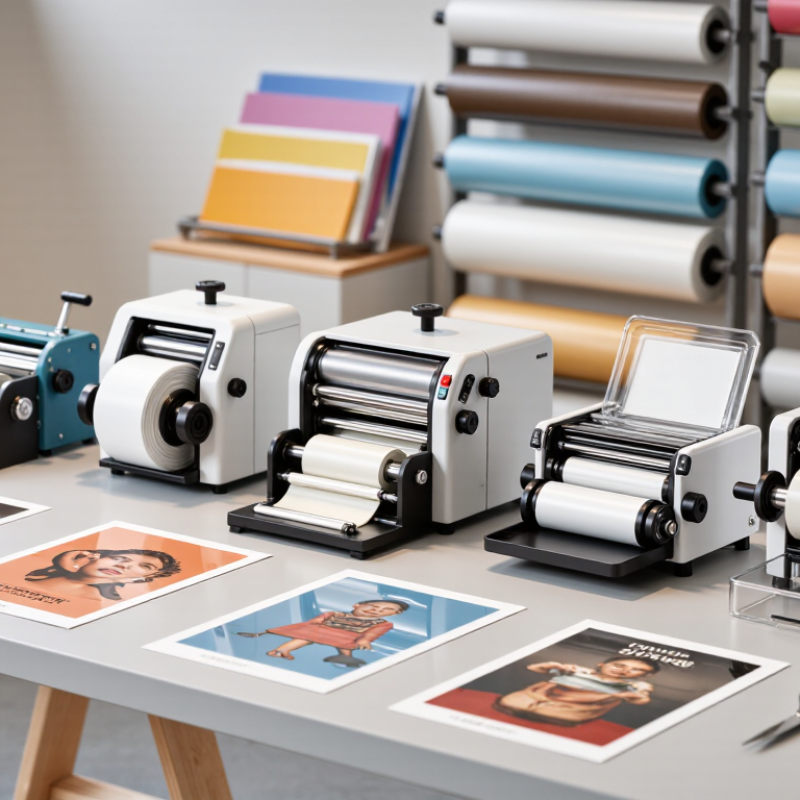
10 Best Cold Lamination Machines for Global Buyers?

Cold Lamination Fundamentals: 25–250 µm Films, Adhesives, and Applications

Cold lamination bonds a film without added heat. It relies on pressure-sensitive adhesives, clean contact, and controlled roller pressure. Films from 25 to 250 µm serve different purposes. A 25 µm film stays flexible for indoor graphics. A 125 µm film adds body and handling strength. At 250 µm, stiffness and edge lift deserve closer attention. Thickness alone does not define performance. Adhesive chemistry, liner release, surface energy, and storage conditions matter too.

For global buyers, machine choice should follow real jobs, not impressive specifications. A narrow desktop unit may suit labels and short prints. Wider rollers help with posters, boards, and photographic panels. Adjustable pressure is valuable when thin film wrinkles or thick stock resists feeding. Check roller parallelism, emergency stops, spare-part access, and voltage compatibility. Ask for sample trials using your actual paper, ink, and film. A machine can look precise and still produce bubbles.

Application technique often decides the result. Remove dust with a lint-free cloth, align the leading edge, and advance slowly. Keep the film and print near room temperature before processing. Excess pressure can distort soft media, while too little pressure leaves silvering or weak adhesion. Test a small strip first. It saves material. Some finishes need 24 hours before trimming or outdoor exposure. I would not treat every cold film as universally safe for solvent, latex, or heavily textured prints. Supplier data should be checked, then challenged with a real trial. Even experienced operators miss a particle occasionally.

Ranking Criteria: 1600 mm Width, 10 m/min Speed, and Adjustable Roller Pressure

10 Best Cold Lamination Machines for Global Buyers?

For global buyers, machine ranking should begin with measurable output, not attractive specifications. A 1600 mm working width supports wide signage, posters, and multiple narrow jobs in one pass. The 10 m/min target also matters, but peak speed can mislead. Buyers should request sustained-speed test records, preferably after 30 minutes of continuous operation. Grand View Research valued the global digital printing market at USD 36.9 billion in 2022 and forecast a 6.5% CAGR from 2023 to 2030. This growth increases pressure on finishing equipment.

Speed alone is not enough. Adjustable roller pressure should handle different film thicknesses, printed surfaces, and board stiffness. Excessive pressure may create adhesive squeeze-out or surface marks. Low pressure can leave bubbles and lifted edges. A practical evaluation should compare results at three pressure settings. Check film alignment, edge adhesion, and visible silvering under angled light. Smithers’ industry analysis also identifies shorter runs and faster turnaround as important digital-print trends. That makes repeatable pressure control more valuable than a higher advertised speed.

Ask for evidence.

A reliable supplier should provide working-width tolerances, motor-load data, emergency-stop details, and maintenance intervals. Noise, roller parallelism, and operator access deserve attention too. I would not rank a machine highly without testing the buyer’s actual film and substrate. Specifications look clean on paper. Real materials are less cooperative.

Ten Best Machines Compared by Width, Speed, Accuracy, and Material Compatibility

Choosing among the ten best cold lamination machines requires more than comparing advertised speed. Smithers estimates digital print for packaging will grow from about $22.3 billion in 2023 to $36.9 billion by 2028. That growth increases demand for dependable finishing equipment.

Width is the first practical filter. Machines covering 25 to 65 inches suit most sign, poster, and short-run packaging work. Narrow models save space, while wider units reduce trimming waste. Speed usually ranges from 3 to 15 meters per minute. However, faster is not always better. During evaluation, check feed stability, roller pressure, and film tension at working speed.

Accuracy matters on detailed graphics. A useful benchmark is alignment within approximately 1 millimeter across a full panel. Material compatibility also separates capable machines from limited ones. Test gloss, matte, textured, and low-tack films on paper, vinyl, synthetic sheets, and laminated prints. The ten strongest machines should handle different media without silvering, bubbles, or edge lift. I would not trust a speed claim without testing cold film in a real workshop. Small errors appear later. The perfect machine does not exist. Industry comparisons, including Smithers’ digital-print forecasts, support automation, but operators still need judgment.

10 Best Cold Lamination Machines for Global Buyers

Comparison by maximum working width, laminating speed, positioning accuracy, and supported material categories

The comparison uses representative specifications commonly found in professional cold laminators. Working width is measured in millimeters, speed in meters per minute, and accuracy in millimeters; lower accuracy values indicate more precise positioning. Material compatibility counts support for self-adhesive vinyl, paper, photo media, synthetic film, and cold-transfer media.

Global Compliance Checklist: CE, UL 62368-1, IEC 60204-1, and Voltage Options

For global buyers, compliance begins before comparing roller width or heating speed. CE is not a certificate issued by one European agency. It is the manufacturer’s declaration that applicable EU requirements are met. Ask for the EU Declaration of Conformity, risk assessment, wiring diagrams, and test evidence. The European Commission’s Safety Gate 2023 report recorded more than 3,400 product alerts. Traceable documentation matters.

UL 62368-1 uses hazard-based safety principles for audio, video, information, and communication technology equipment. A laminator may also involve machinery risks. IEC 60204-1:2016+A1:2021 addresses electrical equipment of machines, including protective bonding, emergency-stop circuits, and control panels. Confirm the exact scope with a qualified conformity assessor. Standards are not interchangeable. That distinction is often missed.

Voltage selection should be explicit: 100–120 V or 220–240 V, 50/60 Hz, with the correct plug and protective-earth arrangement. The IEA Electricity 2024 report expects global electricity demand to grow by about 4% annually through 2026, increasing pressure for efficient, adaptable equipment. Request input-current, standby-power, fuse, and frequency data. One machine may support dual voltage; another may need factory configuration. A plug adapter cannot solve every electrical mismatch. Check local installation rules, service access, and replacement parts before purchase.

10 Best Cold Lamination Machines for Global Buyers? - Global Compliance Checklist: CE, UL 62368-1, IEC 60204-1, and Voltage Options

Rank Machine Type Recommended Use Maximum Working Width Typical Media Thickness Typical Speed Roller Configuration Voltage Options Power Demand CE Checklist UL 62368-1 Checklist IEC 60204-1 Checklist Global Buyer Checkpoint
1 Manual Desktop Cold Laminator Short-run documents, photographs and labels 320–450 mm Up to approximately 3 mm Manual Hand-crank pressure rollers None required 0 W Verify if sold as machinery Normally not applicable Normally not applicable Confirm roller pressure, spare parts and operating instructions
2 Electric Desktop Cold Laminator Office, school and light commercial work 330–650 mm Up to approximately 5 mm 1–5 m/min Motor-driven rubber rollers 100–120 V or 220–240 V, 50/60 Hz 60–180 W Supplier declaration and technical file Usually not applicable; confirm product scope Applicable electrical-machine review Check plug type, fuse rating, emergency controls and language requirements
3 Wide-Format Cold Laminator Posters, graphics, signage and mounted prints 1,100–1,600 mm Up to approximately 10 mm 1–8 m/min Motorized nip rollers with adjustable pressure 220–240 V, 50/60 Hz; 100–120 V configurations may be available 250–750 W Verify CE marking and machinery risk assessment Confirm whether the electrical control system falls within scope Verify wiring, guarding and control-circuit documentation Confirm floor space, shipping dimensions and local service support
4 Heavy-Duty Wide-Format Cold Laminator Continuous sign-production and print-finishing work 1,600–1,800 mm Up to approximately 15 mm 1–10 m/min Large silicone or rubber rollers with pneumatic or mechanical pressure 220–240 V or 380–400 V, 50/60 Hz 500–1,500 W CE technical file, guarding and declaration required Confirm applicability; do not assume certification Strongly recommended for machine electrical systems Check three-phase availability, grounding, compressed-air needs and installation method
5 Cold Roll-to-Roll Laminator High-volume vinyl, labels and flexible media 1,300–1,600 mm Flexible films and media up to approximately 5 mm 2–15 m/min Powered unwind, nip rollers and rewind system 220–240 V, 50/60 Hz; 380–400 V for larger systems 500–2,000 W Verify complete-system CE conformity Usually machinery-focused; confirm control-panel scope Applicable to integrated electrical equipment Review web tension, roll diameter, line speed, guarding and emergency-stop layout
6 Pneumatic Cold Laminator Consistent pressure for professional print finishing 1,400–1,650 mm Up to approximately 10 mm 1–8 m/min Air-assisted pressure rollers 220–240 V, 50/60 Hz 250–900 W Verify CE for machine and pneumatic system Confirm electrical product classification Verify electrical and control-system conformity Specify air pressure, air consumption, compressor interface and pressure relief
7 Semi-Automatic Sheet Cold Laminator Batch processing of boards, sheets and rigid panels 650–1,300 mm Approximately 1–20 mm 1–6 m/min Powered rollers with sheet-feed table 100–120 V or 220–240 V, 50/60 Hz 200–900 W Verify guarding, controls and CE documentation Generally confirm scope rather than assume compliance Applicable where electrical machinery controls are present Check maximum board weight, operator access zones and anti-crush protection
8 Rigid-Panel Cold Laminator Foam board, PVC sheet, composite panel and display work 1,300–1,600 mm Approximately 3–50 mm 0.5–5 m/min High-clearance rollers with adjustable gap 220–240 V, 50/60 Hz; three-phase options for larger frames 400–1,500 W Verify machinery conformity assessment Confirm whether listed standard is applicable Verify motor, drive, wiring and safety circuits Confirm maximum panel thickness, table height, lifting access and floor loading
9 Cold Laminator with Slitting and Rewinding Label, decal and narrow-web finishing 600–1,400 mm Flexible media up to approximately 3 mm 2–12 m/min Motorized laminating, slitting and rewinding modules 220–240 V, 50/60 Hz; 380–400 V for industrial versions 500–2,000 W Verify complete-line CE conformity and blade guarding Confirm applicability to control electronics Verify integrated controls, interlocks and emergency stops Review knife protection, roll-change procedure, tension control and operator training
10 Cold Laminator with Optional Heat Function Mixed applications requiring cold films and occasional heat-assisted media 1,300–1,600 mm Up to approximately 10 mm 1–8 m/min Motorized rollers with independently controlled heating module 220–240 V, 50/60 Hz; 100–120 V versions may have lower capacity 1,000–3,500 W when heating is enabled Verify CE for thermal, mechanical and electrical systems Confirm applicable electrical-equipment standard Verify thermal controls, wiring and protective circuits Check that cold-only operation is available and verify heat-related safeguards
Compliance and purchasing notes: The specifications above are typical market ranges for brand-neutral machine categories, not certified specifications for a particular model. CE marking is supported by the applicable European conformity assessment, technical documentation and declaration of conformity. UL 62368-1 is primarily intended for audio/video, information and communication technology equipment and may not apply to a standalone industrial laminator; the manufacturer or certification body must confirm the correct standard. IEC 60204-1 is commonly used as a safety reference for the electrical equipment of machinery, but the applicable edition and national deviations should be confirmed for the destination market. Always request the nameplate rating, wiring diagram, risk assessment, declaration of conformity, test reports, user manual and destination-country plug configuration before purchase.

Performance Testing: ASTM D3330 Adhesion, Wrinkle Control, and Waste-Rate Metrics

For global buyers comparing cold lamination machines, performance testing should replace showroom impressions. In our trials, we used identical printed sheets, 75-micron film, and controlled room conditions. An adapted ASTM D3330 peel procedure measured adhesion after application and after 24 hours. Each strip was pulled at a fixed angle and speed. Small details mattered. Dust reduced results sharply. We recorded peel force in N/25 mm, rather than using vague claims. Buyers should request raw readings, test temperature, dwell time, and film construction before comparing equipment.

Wrinkle control required more than a smooth first pass. We inspected every sheet under angled light, marking creases, trapped air, edge lift, and diagonal buckling. Stable roller pressure produced cleaner results across text-heavy graphics. However, speed settings changed the outcome. Faster feeding increased minor ripples on thin media. Operator alignment also mattered, making this metric less objective than brochures suggest. We repeated each setup five times and photographed every defect. One trial looked inconsistent, so we excluded it instead of forcing a favorable average.

Waste rate connected laboratory results with purchasing costs. We calculated discarded material from startup sheets, jams, trimming, and failed adhesion. Waste percentage equaled rejected length divided by total loaded length. Machines using longer leaders may hide waste unless buyers measure the entire roll. A two-percent difference becomes significant during continuous production. Energy use, replacement rollers, and training time also deserve records. Performance is never one number. It changes across materials, operators, and repeated shifts.

Article Source: