10 Best Office Chair Stools for Global Buyers?
Choosing the right seating can change how a workspace feels after several hours of work. An Office Chair Stool must support movement, posture, and practical daily routines. Global buyers also face different desk heights, floor types, body sizes, and shipping conditions.
This guide examines 10 best office chair stools for international workplaces, home offices, studios, and reception areas. Each option deserves attention for adjustability, seat comfort, base stability, materials, and maintenance needs. A height-adjustable model may suit standing desks, while a cushioned stool can reduce pressure during longer sessions. Wheels improve mobility, but they may move too easily on smooth floors. Small details matter.
Real workplace testing should include sitting, leaning, turning, and reaching across a desk. We also consider assembly instructions, warranty information, supplier transparency, and reported durability. These factors help buyers compare products beyond attractive photographs and low prices. However, comfort remains personal. A stool praised by one user may feel too firm for another. That is worth remembering.
Not every weakness is obvious. Some models look sturdy but wobble on uneven flooring. Others offer impressive features but lack useful foot support. Measurements can also vary between sellers, creating avoidable purchasing mistakes. Our recommendations aim to provide balanced, practical guidance rather than promise a perfect choice. Check dimensions carefully. A dependable Office Chair Stool should fit the user, desk, room, and working habits before it fits the budget.
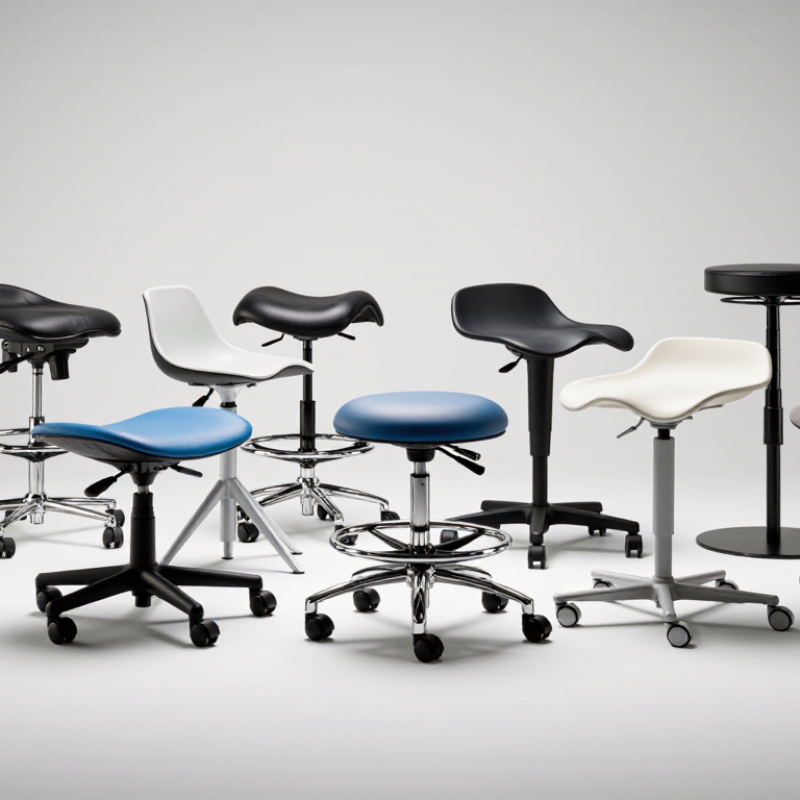
What Defines a High-Quality Office Chair Stool?
A high-quality office chair stool should support active work without making the body fight for balance. The seat height must adjust smoothly, allowing feet to rest firmly on the floor or foot ring. A stable five-point base matters, especially on hard flooring. Casters should roll quietly, but they should not make the stool feel loose.
In practical workplace evaluations, comfort often comes from small details. A contoured seat can reduce pressure behind the knees during long drafting sessions. Breathable fabric helps when the room becomes warm. Dense foam should recover after repeated use, rather than forming a permanent hollow. The backrest, if included, should support the lower back without forcing one fixed posture. Small adjustments matter.
Durability requires more than attractive materials. Check the lift mechanism, stitching, joints, and base connection. A well-made stool should remain steady when users lean, turn, or reach. Maintenance also matters for global buyers; replaceable casters and clear assembly instructions can prevent unnecessary waste. However, no stool suits every worker. I once preferred a firm seat, then noticed discomfort after several hours. That changed my view. Testing height, movement, and pressure personally remains essential. A polished appearance can mislead. A simple-looking stool may perform better when its engineering is sound.
| Rank | Office Chair Stool Type | Typical Seat Height | Seat Size | Height Adjustment | Recommended User Weight | Base and Mobility | Footrest Design | Ergonomic Features | Recommended Work Setting | Quality Indicators |
|---|---|---|---|---|---|---|---|---|---|---|
| 1 | Adjustable Drafting Chair Stool | 58–79 cm 22.8–31.1 in |
Seat width: 45–50 cm Seat depth: 42–47 cm |
Gas-lift height adjustment with a range of approximately 20 cm | Up to 120 kg 265 lb |
Five-star reinforced base with 360-degree casters | Fixed circular foot ring or height-adjustable footrest | Backrest, lumbar contour, waterfall seat edge, adjustable seat height | Standing desks, drafting tables, reception counters, and studio workstations | Stable five-point base, smooth gas lift, breathable upholstery, and low-pressure casters |
| 2 | Ergonomic Saddle Office Stool | 45–64 cm 17.7–25.2 in |
Seat width: 40–46 cm Seat depth: 35–42 cm |
Gas lift with approximately 19 cm of adjustment | Up to 110 kg 243 lb |
Five-star nylon or aluminum base with casters | Integrated lower foot ring on selected configurations | Saddle-shaped seat, pelvic-supporting profile, 360-degree swivel | Computer work, laboratories, clinics, and compact offices | Balanced saddle profile, dense molded foam, stable base geometry, and easy-clean surface |
| 3 | Backless Active-Sitting Stool | 46–66 cm 18.1–26.0 in |
Seat diameter: 34–40 cm or width: 36–42 cm |
Gas-lift adjustment with a tilting or self-centering mechanism | Up to 120 kg 265 lb |
Wide five-star base with quiet casters | Usually not included; designed for frequent foot movement | Flexible seat movement, 360-degree rotation, compact footprint | Agile workstations, sit-stand desks, and short-duration tasks | Controlled movement, broad base, non-slip seat, and a secure height-locking mechanism |
| 4 | High-Back Ergonomic Stool Chair | 56–78 cm 22.0–30.7 in |
Seat width: 45–51 cm Seat depth: 43–48 cm |
Gas lift with seat-height and tilt-resistance controls | Up to 136 kg 300 lb |
Reinforced five-star base with 60 mm casters | Large circular footrest for elevated working positions | Adjustable backrest, lumbar support, seat tilt, and padded armrests on some models | Longer desk sessions at high work surfaces and technical counters | Firm lumbar support, durable frame, synchronized adjustment, and tested caster stability |
| 5 | Mesh-Back Drafting Stool | 57–80 cm 22.4–31.5 in |
Seat width: 45–49 cm Seat depth: 42–46 cm |
Height-adjustable gas lift with a locking lever | Up to 120 kg 265 lb |
Five-star base with dual-wheel casters | Chrome or nylon foot ring, generally fixed in position | Breathable mesh back, lumbar contour, seat-height adjustment | Warm climates, shared offices, design studios, and control rooms | Air-permeable mesh, reinforced back frame, smooth height control, and scratch-resistant base |
| 6 | Compact Counter-Height Office Stool | 51–69 cm 20.1–27.2 in |
Seat width: 41–46 cm Seat depth: 39–44 cm |
Manual lever or gas-lift adjustment | Up to 100 kg 220 lb |
Compact five-star base or four-leg steel base | Integrated foot ring for counter-height seating | 360-degree swivel, supportive seat padding, optional low backrest | Small offices, hotel work areas, reception counters, and home workspaces | Small footprint, reliable swivel plate, stable center of gravity, and wipe-clean upholstery |
| 7 | Heavy-Duty Industrial Office Stool | 48–70 cm 18.9–27.6 in |
Seat width: 45–52 cm Seat depth: 42–48 cm |
Heavy-duty gas lift with reinforced adjustment column | Up to 150 kg 331 lb |
Steel-reinforced five-star base with larger casters | Wide steel foot ring with protective coating | High-density foam, durable upholstery, stable seat pan, and optional back support | Workshops, industrial offices, laboratories, and high-use commercial areas | Reinforced welds, high load rating, abrasion-resistant cover, and impact-resistant components |
| 8 | Ergonomic Stool with Adjustable Footrest | 52–76 cm 20.5–29.9 in |
Seat width: 44–49 cm Seat depth: 41–46 cm |
Gas lift plus independently adjustable footrest | Up to 120 kg 265 lb |
Five-star base with locking or free-rolling casters | Height-adjustable, wraparound footrest | Adjustable seat depth, lumbar support, tilt control, and foot-position flexibility | Extended drafting, engineering, architecture, and elevated desk work | Footrest moves with the user, seat supports neutral posture, and controls are reachable while seated |
| 9 | Upholstered Reception and Meeting Stool | 45–57 cm 17.7–22.4 in |
Seat width: 44–50 cm Seat depth: 40–45 cm |
Usually fixed height; optional 8–12 cm gas-lift range | Up to 110 kg 243 lb |
Four-leg steel or aluminum base; some versions swivel | Typically no footrest at standard desk height | Padded seat, supportive low back, rounded edge, and 360-degree swivel on selected models | Reception areas, meeting rooms, visitor seating, and collaborative zones | Stable non-tipping frame, durable upholstery seams, floor protection, and comfortable short-term support |
| 10 | Foldable or Nesting Office Stool | 45–60 cm 17.7–23.6 in |
Seat width: 40–46 cm Seat depth: 38–43 cm |
Usually fixed height; folding mechanisms may be available | Up to 100 kg 220 lb |
Four-leg or sled-style base designed for nesting and storage | Generally not included | Lightweight construction, padded seat, stackable or foldable frame | Training rooms, flexible offices, event spaces, and temporary workstations | Secure folding joints, anti-slip feet, low storage volume, and frame resistance to repeated handling |
Related Posts
-
10 Office Armchair Buying Tips for Global Buyers
-
Unveiling the Finest Office Chair Crafted by Leading Manufacturers in China
-
How to Choose the Best Office Chair for Comfort and Productivity?
-
Best Office Chair Stool for Comfort and Ergonomics?
-

How to Choose the Best Chair Office for Your Comfort and Productivity?
-
10 Best Desk Armchairs for Home Office Use in 2026