How to Buy Real Insects in Resin in Bulk?
Buying Real Insects In Resin in bulk takes more than choosing a bright specimen beneath clear acrylic. You need to judge species identification, sourcing records, preservation quality, and batch consistency. Entomologist E. O. Wilson’s phrase “the little things that run the world” is a useful reminder: each specimen represents a living organism, not merely a decorative inclusion. Ask suppliers where specimens come from and whether they can document lawful, responsible sourcing. Ask for proof. Not just photos. Request close-ups showing wings, legs, bubbles, surface clarity, and the resin’s edges. A small sample order can reveal details that a polished product image hides.
Before confirming volume, compare written specifications for species, dimensions, color, finish, packaging, and acceptable defects. Check how the supplier handles substitutions, breakage, and quality disputes. For larger orders, request a sample from the actual production batch, not only a showroom piece. That is harder. But it can prevent a costly mismatch. Confirm that the supplier can provide suitable shipping and product documentation for your destination, and independently check applicable requirements. Rules and import conditions vary. This guide will help buyers assess suppliers, compare quotes, and build a practical inspection checklist. Bulk buying is not foolproof. Even clear resin can hold bubbles, and natural specimens vary. A careful process cannot remove every uncertainty, but it can make purchasing decisions more informed and reliable.
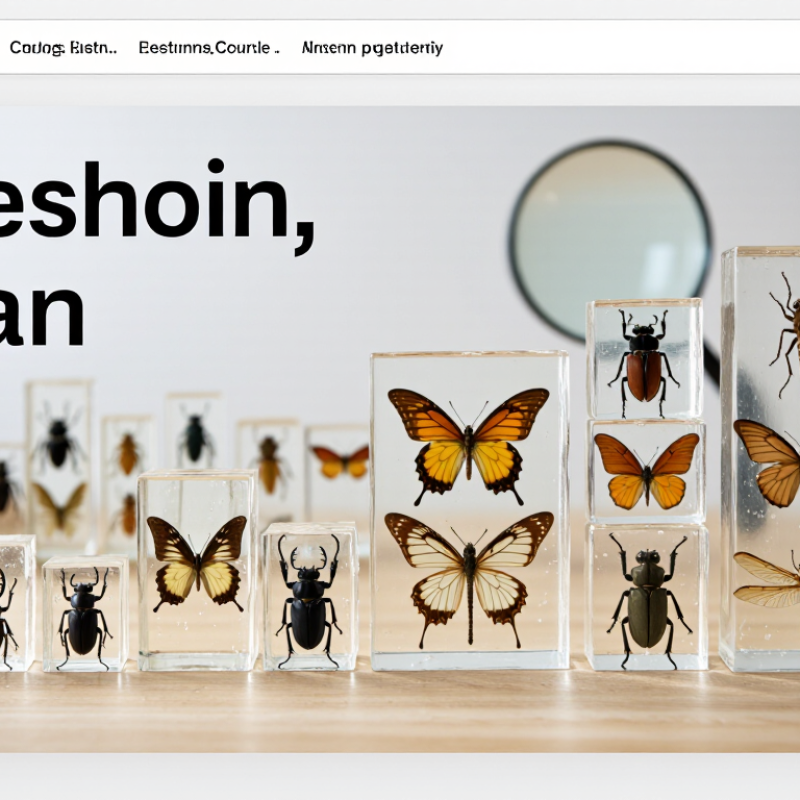
Identify Insect Species and Check CITES Trade Restrictions
Before buying resin-embedded insects in bulk, ask for each specimen’s scientific name, not just “blue butterfly” or “beetle.” Common names can cover several species with different trade rules. Request the supplier’s source records, country of origin, and any required CITES documents. CITES Secretariat species information covers more than 40,000 animal and plant species, but not every insect is listed. Check the current Appendices for the exact taxon and any annotations. Small label, big difference.
A resin coating does not automatically remove trade controls. If a listed species is involved, rules may apply to the specimen even when it is mounted or processed. Check requirements with the relevant wildlife authority before placing a large order; permits and certificates depend on the species, source, and destination. The UNEP-WCMC CITES Trade Database records reported transactions by taxon, source, and purpose, making it useful for checking trade patterns—not proof that a particular item is compliant. Records can be incomplete or reported late.
Conservation context matters, too. The IPBES Global Assessment (2019) estimated that around one million animal and plant species face extinction risk. That figure is not insect-specific, but it supports careful sourcing. Ask for invoices that match species names and quantities, and keep documents with the shipment. If a supplier cannot identify a specimen clearly, pause the order. Resin can hide details. A clear photo may help, but it cannot replace reliable identification.
Specify Resin Tests Using ASTM D570 and ASTM D638
For bulk insect-in-resin orders, request ASTM D570 and D638 results for the resin grade and production lot. ASTM D570 measures water absorption under defined conditions. Ask the supplier to report specimen conditioning, immersion time, temperature, and percentage weight gain. A clear test record is more useful than “waterproof” on a sales sheet. Small details matter.
ASTM D638 evaluates tensile properties of plastic specimens, including strength and elongation. Request the specimen type, thickness, test speed, and failure location, along with the full report. Compare lots tested using the same method. These results can help screen resin consistency before ordering hundreds of pieces. They do not prove each finished casting will resist drops, heat, or long-term sunlight. Keep it specific.
Request representative samples and inspect clarity, bubbles, insect placement, and edge finish alongside the test data. D570 and D638 generally characterize prepared resin specimens, not every irregular finished object. That distinction is easy to miss. If pieces will face damp storage or frequent handling, request separate finished-product checks and define acceptance limits in writing. A test sheet cannot replace sample review; sometimes the resin passes while a casting still looks cloudy.
Set Order Volume, Dimensions, and Batch-Tolerance Limits
When ordering real insects sealed in resin, define the batch before discussing price. State the total quantity, units per carton, and whether replacements count toward the order. Small details matter. Give exact finished dimensions, not just “small” or “standard.” Specify length, width, thickness, and measurement points. A ruler beside a sample can prevent mismatched expectations. Ask for a pre-production piece made with the same insect type, resin, and polishing method. Record its approved measurements and appearance. Natural specimens vary in wing angle, color, and body size. Expect some variation.
Set written tolerance limits for resin dimensions, such as an agreed millimeter range, and distinguish them from natural specimen variation. Define defects clearly: a sharp exposed edge, cracked casting, severe clouding, or an insect outside the agreed display area. Include an acceptable defect rate and inspection method, such as checking a random sample from each carton under consistent light. For a large run, request photos and measurements from several finished pieces before shipment. Confirm packaging protects corners and prevents pieces from rubbing together. Keep one approved sample for comparison after delivery. Vague tolerance language can create awkward disputes; it is worth spelling out borderline cases, even if that feels overly cautious. Confirm specimens are lawfully sourced and permitted for the destination, with supporting documents where applicable.
Agree on an ISO 2859-1 Inspection Plan, Such as AQL 2.5
When buying real insects preserved in resin in bulk, agree on the inspection plan before production. ISO 2859-1 provides attribute-sampling procedures, with sample size linked to lot size and inspection level. For example, under normal inspection, General Level II, a lot of 3,201–10,000 units uses code letter L. The standard’s single-sampling table gives a sample of 200; at AQL 2.5, accept up to 10 defects and reject at 11. This is a lot-acceptance rule, not a promise that exactly 2.5% of every shipment will be defective. Small details matter.
Define defects with the supplier in writing. A major defect might be a cracked resin body or a badly obscured specimen; minor defects could include small bubbles or slight positioning variation. Photograph approved samples beside a ruler, then inspect randomly selected finished pieces under consistent lighting. Check insect leg and wing visibility, resin clarity, sharp edges, and packaging damage. Record findings by defect class and lot number. AQL 2.5 is a starting point, not magic; it may be too loose for fragile display pieces. Agree on stricter criteria for safety-critical issues, and confirm the applicable ISO tables and inspection conditions before the order ships.
Verify Sample Quality, Packaging, and Destination-Country Documents
Before ordering real insects in resin in bulk, request a sample made with the same process and materials as the planned shipment. Check it in daylight for cloudy patches, trapped bubbles, loose edges, and visible damage to the insect. Compare its size, color, and placement with the written specification. Ask how much variation is acceptable across a production run. Small differences happen.
Packaging matters once many pieces travel together. Ask for individual sleeves or dividers, snug cushioning, and sturdy cartons that prevent items from rubbing against one another. Request photos of a packed carton, plus its dimensions and gross weight, before approving the order. If heat or rough handling is possible in transit, discuss protective packing with the supplier. Keep one approved sample for comparison when the shipment arrives. It is easy to overlook this step.
Check destination-country requirements before paying the balance or booking freight. Request a commercial invoice with an accurate product description, quantity, value, and country of origin. Ask whether supporting species or origin information is available, then confirm any required documents with the destination customs authority or a qualified broker. Requirements can vary by species and destination. Keep copies of the approved sample photos and final paperwork together; vague descriptions can slow clearance. I would verify twice.