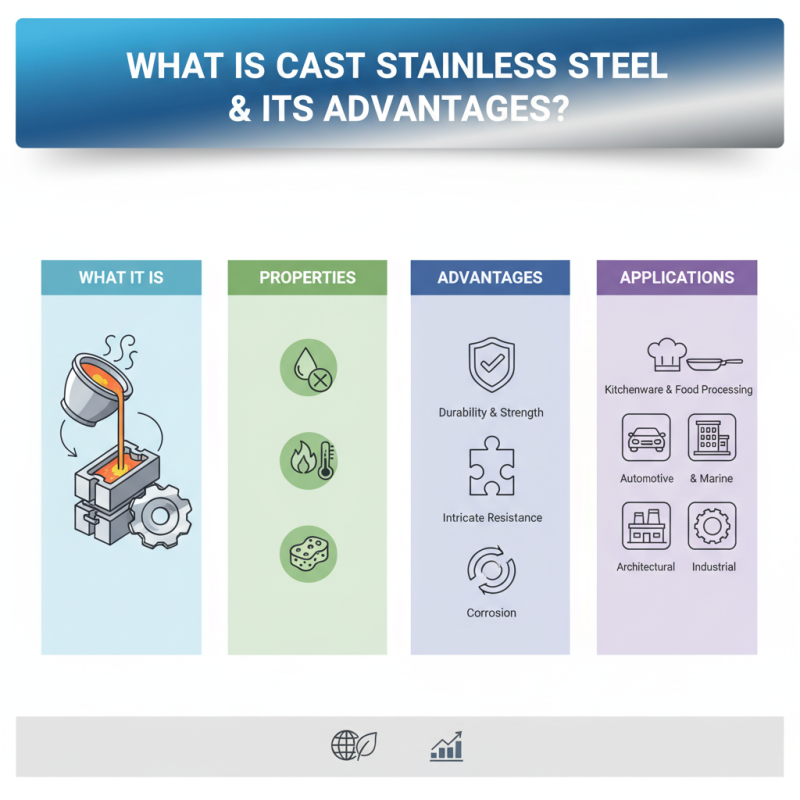
What is cast stainless steel and its advantages?
cast stainless steel is an alloy that combines the properties of traditional steel and corrosion resistance. Its unique characteristics make it a preferred material in various industries. From kitchenware to industrial applications, cast stainless steel offers durability and strength.
This material is formed by melting stainless steel and pouring it into molds. The casting process allows for intricate designs and complex shapes. However, the production of cast stainless steel can be energy-intensive. This raises some environmental concerns.
Despite these challenges, the advantages are significant. Cast stainless steel resists rust and withstands extreme temperatures. It is also easy to clean, making it ideal for use in food processing. The reliability of this material cannot be ignored. Its uses span across automotive, marine, and architectural sectors. Understanding cast stainless steel’s benefits reveals its essential role in modern manufacturing.
Definition of Cast Stainless Steel
Cast stainless steel is a specific type of stainless steel formed through the casting process. This involves pouring molten steel into a mold, allowing it to solidify. The result is a product with complex shapes and internal structures that can be difficult to achieve with other manufacturing methods. Cast stainless steel offers unique advantages in various applications.
One major benefit is its excellent corrosion resistance. This property helps it to withstand harsh environments. It prevents rusting and degradation over time. Additionally, cast stainless steel can endure high temperatures. This makes it ideal for use in industries like aerospace, chemical processing, and food production.
However, there are challenges too. Casting can lead to defects such as porosity or inclusions. These issues can weaken the material and lead to failures. Fabricators must ensure quality control during the production process. Careful inspection is critical. The benefits are significant, but one must approach with an understanding of potential imperfections.
What is cast stainless steel and its advantages?
| Property | Description |
| Corrosion Resistance | Excellent resistance to rust and corrosion due to high chromium content. |
| Strength | High tensile strength makes it suitable for high-stress applications. |
| Versatility | Can be cast into complex shapes, allowing for design flexibility in various applications. |
| Durability | Longevity in harsh environments extends the lifecycle of components. |
| Aesthetic Appeal | Attractive finish suitable for architectural and decorative applications. |
| Recyclability | Fully recyclable, making it a sustainable material choice. |
Composition and Manufacturing Process of Cast Stainless Steel
Cast stainless steel is an alloy that combines iron with chromium, nickel, and other elements. The manufacturing process typically involves melting metal and pouring it into molds. This procedure results in a strong and durable material, essential for many applications. According to recent industry reports, cast stainless steel has grown in popularity due to its resistance to corrosion and high temperatures.
The casting process usually begins with the preparation of the metal alloy. The composition varies widely depending on the desired properties. For instance, adding nickel can improve ductility while increasing chromium enhances corrosion resistance. The melt is then poured into pre-heated molds to avoid premature cooling. Factors like temperature control and the quality of the base materials are crucial. Research shows that slight variations in composition can significantly affect the final product's quality.
Despite its advantages, challenges remain in the manufacturing process. Defects like porosity and inclusions can arise during casting. These issues require careful monitoring and quality checks. Manufacturers continue to explore better techniques. Innovations in materials science are also paving the way for enhancing cast stainless steel properties. The quest for perfection in casting remains a continuous journey.
Key Advantages of Using Cast Stainless Steel
Cast stainless steel is a popular choice in various industries due to its remarkable properties. One key advantage is its excellent corrosion resistance. According to the International Stainless Steel Forum, this material retains structural integrity even in harsh environments, making it ideal for marine or chemical applications. Engineers often prefer cast stainless steel when designing equipment that must withstand extreme conditions.
Another notable benefit is its high durability and strength. Cast stainless steel components can endure heavy loads while maintaining their shape. This strength reduces the frequency of replacements. A report from the American Society of Mechanical Engineers indicates that the tensile strength of cast stainless steel can exceed 70 ksi (kilopounds per square inch), which is impressive. Additionally, it offers improved wear resistance, extending the lifespan of critical components.
**Tip:** Always consider the specific environment when selecting materials. Corrosion can vary greatly based on moisture and chemical exposure.
While cast stainless steel has many benefits, it is essential to assess the cost implications. The initial investment is usually higher than some alternatives. However, the long-term savings in maintenance and replacement costs often offset this. Misjudging the application's requirements can lead to overspending.
**Tip:** Evaluate the total lifecycle cost, not just upfront expenses. This analysis can uncover potential savings over time.
Key Advantages of Using Cast Stainless Steel
Applications of Cast Stainless Steel in Various Industries
Cast stainless steel has a wide range of applications across various industries due to its unique properties. In the automotive sector, manufacturers use it for components that require high corrosion resistance and strength. For example, cast stainless steel is often chosen for exhaust systems. A recent industry report noted that the automotive sector accounts for about 25% of cast stainless steel use.
In the aerospace industry, cast stainless steel plays a crucial role as well. Parts like turbine blades and structural components benefit from its durability and ability to withstand extreme temperatures. The aerospace industry is projected to grow at a rate of 4.5% annually, increasing demand for these materials. However, achieving the perfect casting in aerospace can be challenging, leading to defects that require additional inspections and repairs.
The food and beverage industry values cast stainless steel for equipment like mixers and tanks. Its non-reactive surface ensures product purity. A study from a food industry report highlighted that around 30% of processing equipment is made from cast stainless steel. Yet, mismatches in surface finish can lead to contamination risks. These aspects illustrate both the versatility and the complexities involved in using cast stainless steel across different sectors.
Comparative Analysis with Other Material Types
Cast stainless steel is known for its unique properties. It offers excellent corrosion resistance and durability. In comparison to carbon steel, which often rusts easily, stainless steel holds its own. According to a study by the Steel Development Association, stainless steel can last up to five times longer than carbon steel in harsh environments. This longevity makes it ideal for various applications, including chemical processing and marine environments.
When comparing cast stainless steel to aluminum, the differences become more evident. Stainless steel is heavier but has a higher tensile strength. This makes it suitable for heavy-duty applications. Aluminum may resist corrosion, but it lacks the strength that cast stainless steel provides. A report from the Aluminium Association highlights that while aluminum is easier to manipulate, its structural integrity can weaken over time, especially in demanding conditions.
Despite its advantages, cast stainless steel presents challenges. It can be more expensive to produce than other materials. Production results in a higher carbon footprint. A report from the International Stainless Steel Forum stresses that sustainability remains an issue in the industry. As manufacturers innovate, they must lead the way in environmentally friendly practices. Balancing performance and sustainability is crucial for future advancements in stainless steel production.