How to Choose the Best Office Chair Stool for Comfort?
Choosing the right Office Chair Stool can greatly influence workplace comfort. Studies indicate that around 70% of office workers experience discomfort due to improper seating. An ergonomic design is key to reducing strain. According to furniture expert Dr. Emma Harris, “A well-chosen stool enhances productivity and well-being.”
When selecting an Office Chair Stool, consider height adjustability and support. Look for options that allow movement and promote better posture. A report by the Ergonomics Society notes that poor seating can lead to chronic pain. It's crucial to test different models before making a choice.
Inadequate seating can result in lethargy and decreased focus. Many overlook the significance of comfort in their decision-making. Investing time to find the right Office Chair Stool is vital. Your health and productivity depend on it.
Understanding the Importance of Comfort in Office Chair Stools
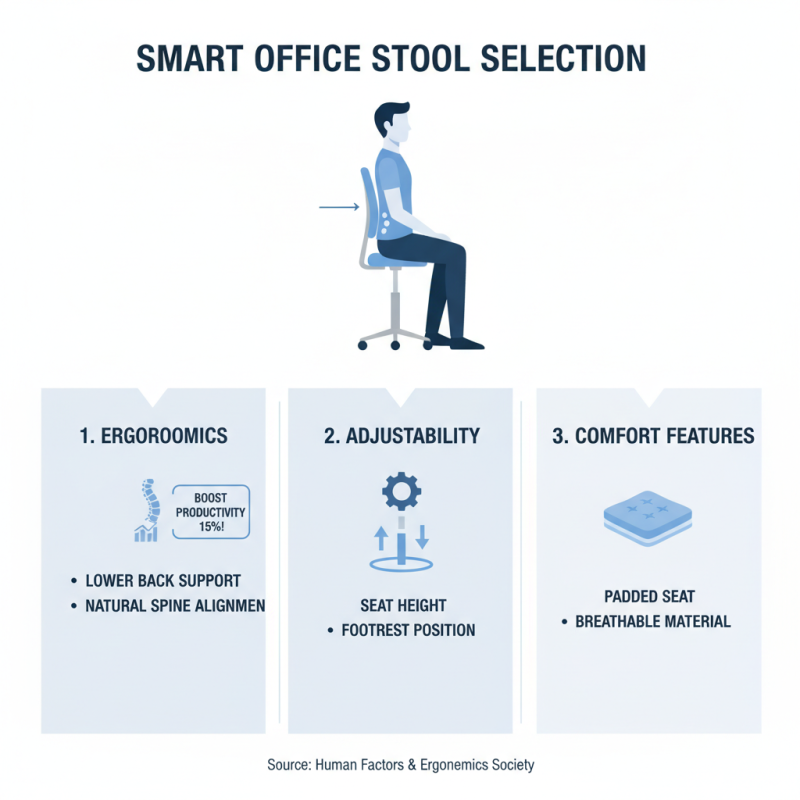
Choosing an office chair stool is essential for comfort. Comfort affects productivity and overall well-being. An uncomfortable seat can lead to distraction and fatigue. It’s crucial to understand what makes an office stool comfortable.
Height, support, and material play key roles. A stool that is too high or low affects posture. Proper support for the lower back helps maintain spine alignment. Materials should provide just the right amount of cushioning. Stools with hard surfaces may cause discomfort after hours of use. Balancing firmness and softness is tricky but vital.
Finding the perfect fit takes time. You might need to try several stools. Observe how your body feels after each test. If discomfort arises, reconsider your choice. It’s about personal preference. Every person’s body is unique, and what works for one may not work for another. Listen to your body; it knows best.
Comfort Ratings of Different Office Chair Stools
Materials and Design Elements for Enhanced Comfort
Choosing the right office chair stool is crucial for comfort. Materials play a significant role in how a stool supports your body. Look for breathable fabrics that allow air circulation.
Mesh seats can provide coolness, especially during long hours of work. However, they may not always offer enough padding. Some users find that leather or padded options are more comfortable but can trap heat.
Design elements impact both aesthetics and functionality. A height-adjustable stool helps accommodate different desk heights. Consider a swivel feature for ease of movement. Feet support is essential, too. A stable base prevents wobbling, which can be distracting. Yet, some stylish designs sacrifice stability for looks, leading to discomfort over time.
Evaluate how the stool feels under prolonged sitting. If it creates pressure points, it’s time to rethink your choice. Don't ignore how the design fits your workspace. A stool should not only look good but should also feel good to use daily.
Height Adjustment and Mobility: Finding the Right Fit
Choosing the right office chair stool is crucial for comfort and productivity.
Height adjustment plays a significant role in this process. Look for stools with a gas lift feature.
This allows you to change the height easily. An appropriate height promotes good posture and reduces strain.
Make sure the stool suits your desk's height.
Mobility is another key aspect to consider. A stool with wheels can provide flexibility.
It allows you to move around your workspace with ease. However, check if the wheels glide smoothly on your flooring.
If they don’t, it might lead to frustrating movement.
Tips: Test the height adjustment feature before purchase. Sit down and find your comfort level.
Make sure the stool feels stable at your preferred height. Observe how easy it rolls.
Sometimes, wheels designed for carpets don't work well on hard floors.
If you're unsure, consider a stool with a swivel option. This may enhance mobility and make your workspace more dynamic.
Finding the right fit requires some trial and error. Don’t rush; take your time to assess different options.
Testing Comfort: How to Evaluate an Office Chair Stool Before Purchase
Choosing the right office chair stool can significantly impact your comfort. Evaluating a stool before purchase is crucial. Start by testing the seating height. Stand beside the stool and sit down. Your feet should rest flat on the ground. If your legs dangle, it's not the right height.
Next, consider the cushion. A too-soft seat can lead to discomfort over time. A firm but forgiving cushion is ideal. Press down and see if it springs back. You want support, not sinking.
Tips for testing comfort:
1. Adjust the height several times. Notice how it feels when you change positions.
2. Take a short walk after sitting. This helps gauge if you feel any fatigue.
3. Spend at least 10 minutes sitting. Short tests might not reveal true comfort levels.
Lastly, don't forget about the backrest. A supportive back can change everything. Lean back and see if it contours to your spine. It should feel natural.
Reflect on your needs. Test different styles. Sometimes what looks good does not feel good. Make comfort your top priority.
How to Choose the Best Office Chair Stool for Comfort? - Testing Comfort: How to Evaluate an Office Chair Stool Before Purchase
| Feature |
Description |
Importance Level |
User Rating (out of 5) |
| Seat Height Adjustment |
Allows the user to customize the height of the stool for optimal comfort. |
High |
4.5 |
| Seat Cushioning |
Quality of padding affects comfort level during long hours of sitting. |
High |
4.7 |
| Back Support |
Provides essential lumbar support to reduce strain on the back. |
High |
4.3 |
| Material Quality |
Durability and breathability of fabric impact comfort and longevity. |
Medium |
4.0 |
| Weight Capacity |
Ensure the stool can support the weight of the user comfortably. |
Medium |
4.2 |
| Mobility |
Swivel and wheel functionality for ease of movement. |
Low |
3.8 |