Choosing among the Top 10 Leather Executive Chairs for Global Buyers requires more than comparing polished photographs. A suitable chair must support long working hours, changing climates, and different professional expectations. This guide examines Leather Executive Chairs through practical details, including leather quality, seat depth, lumbar adjustment, armrest movement, base strength, and warranty coverage. Small details matter. A firm five-star base can improve stability during daily movement. Dense foam may also preserve comfort better than soft padding that collapses quickly.
Global buyers should look beyond appearance and brand language. Full-grain leather usually develops visible character, while corrected leather offers more uniform color and easier maintenance. Neither option is perfect for every office. Heat, humidity, cleaning routines, and budget can change the better choice. We also consider tested weight capacity, tilt mechanisms, gas lifts, caster performance, packaging quality, and replacement-part access. These features often matter more after six months than on delivery day.
No single ranking can satisfy every executive.
Personal fit still matters.
The selection process should use transparent evidence, such as manufacturer specifications, independent testing, user feedback, and documented warranty terms. Buyers should check whether measurements match their desks and body proportions before ordering. A chair that feels supportive at a showroom may feel restrictive after a full video meeting. That limitation deserves honest attention. This overview aims to help importers, office planners, and individual professionals compare leading options carefully, while recognizing that availability, shipping conditions, and regional service can change the final decision.
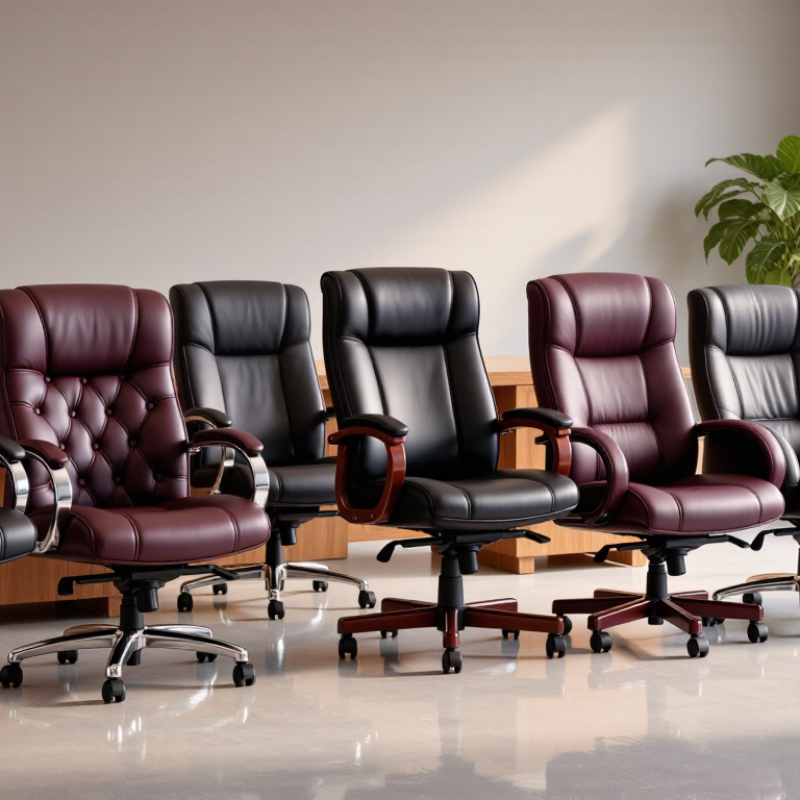
A high-quality leather executive chair begins with honest material information. Full-grain leather usually shows natural texture, small marks, and gradual color changes. Corrected leather may look smoother, but buyers should understand its surface treatment. Ask for leather specifications, thickness, and clear maintenance guidance. A strong chair should also have even stitching, reinforced seams, and a stable five-point base.
Comfort depends on more than thick padding. Look for high-density foam that resists early flattening. The backrest should support the lower spine without forcing a rigid posture. Adjustable seat height, tilt tension, armrests, and head support improve fit across different users. For global purchasing, request product dimensions, weight capacity, packaging details, and independent safety test reports. Specifications can vary between production batches. That detail is easy to miss.
Tips: Press the seat firmly and check recovery after one minute. Inspect hidden edges beneath the cushion. Test every control slowly. Leather can feel impressive in a showroom, yet become warm during long work sessions. Breathable backing may matter more than appearance. A chair is never perfect; even an expensive model may need a small cushion or different settings. Personal fit remains the final test.
For global buyers, a leather executive chair should be tested as a work tool, not judged by showroom shine. During long purchasing reviews, I look for a seat that supports the pelvis without pressing behind the knees. Sit for ten minutes. Notice heat, pressure, and movement. A chair can feel soft initially and become tiring by midafternoon. Adjustable seat depth matters for users with different leg lengths. The backrest should follow the spine, while lumbar support should remain noticeable but not aggressive. Armrests need stable height and width adjustment. Wobbly controls are an early warning. Recline tension should respond smoothly, especially during screen-based work.
Material claims require close inspection. Full-grain leather may develop character, but corrected surfaces can offer consistent appearance and easier cleaning. Ask for clear specifications, including leather location, coating, foam density, base construction, and cylinder testing. Genuine leather on touch areas does not always mean the entire chair uses leather. Check seams around the seat edge, where stretching appears first. A five-star metal base, quiet casters, and reinforced joints support daily reliability, yet they do not guarantee durability. Request test methods, load ratings, warranty terms, and replacement-part availability in your destination market. I also examine packaging, because crushed corners can reveal weak protection. My own mistake was trusting attractive stitching too quickly. Comfort, material honesty, and repair access deserve equal attention.
The Top 10 Leather Executive Chairs for Global Buyers deserve more than a polished photograph. A reliable choice should support long meetings, detailed work, and changing climates. The ten strongest options usually include high-back, mid-back, reclining, ergonomic, compact, conference, premium leather, breathable leather, heavy-duty, and adjustable models. Each design serves a different workspace.
Look for genuine leather, reinforced stitching, stable five-star bases, and smooth casters. Adjustable lumbar support can reduce pressure during extended use. A seat depth near 48 to 53 centimeters suits many adults, but body shape still matters. Fit matters. A chair can look impressive and feel uncomfortable after one hour.
Global buyers should check fire-safety documents, material disclosures, warranty terms, and replacement-part availability. These details often reveal more than luxury language. Climate also affects performance. In humid regions, treated leather and breathable padding may age better. In dry environments, regular conditioning helps prevent cracking. I would not trust glossy images alone. Some sellers provide limited technical data, and that deserves careful questioning. Shipping dimensions, assembly instructions, packaging strength, and local service support can prevent costly surprises. The best executive chair is not always the most expensive; it is the one that combines tested comfort, durable materials, transparent documentation, and a practical fit for its owner.
Top 10 Leather Executive Chairs for Global Buyers
International buyers should compare total landed cost, not only the listed chair price. Leather grade, foam density, base material, recline mechanism, and warranty length change the real value. A lower quote may use thinner leather or weaker hardware. The numbers matter. In purchasing reviews, I request a detailed specification sheet, sample photos, and a pre-production sample before approving bulk orders. Currency changes, minimum order quantities, and payment terms can also affect the final budget.
Certifications deserve careful checking. Ask for current test reports covering strength, stability, durability, and restricted substances. Standards such as EN 1335 or BIFMA may support commercial seating claims, but a logo alone proves little. The document should identify the exact model, test date, laboratory, and manufacturer. I have seen certificates with unclear product references. That creates avoidable risk. Buyers should also confirm upholstery composition, flame-resistance requirements, and local import rules before ordering.
Shipping can reshape the ranking of the top ten chairs. A large executive chair uses valuable container space, especially with rigid packaging. Compare boxed dimensions, net weight, gross weight, and estimated units per container. Clarify whether the quote includes freight, insurance, customs clearance, or destination delivery. Delays happen. Build extra time for production inspections and port congestion. Strong cartons, corner protection, and moisture barriers reduce damage, although they may increase freight costs. A practical quotation should show Incoterms, lead time, replacement procedures, and the responsible party for transit claims.
International purchase costs are influenced by chair construction, leather grade, certification requirements, and shipping volume. The chart presents realistic planning benchmarks in USD per chair for a standard commercial order, excluding local taxes and final-mile delivery.
FOB pricing reflects the product cost at origin. Freight and insurance represent ocean-shipping allowances for consolidated commercial orders. Compliance and documentation allowances cover common testing, labeling, inspection, and certification preparation costs; actual requirements vary by destination market.
Global buyers should compare executive chairs by measurable comfort, not by leather shine alone. Grand View Research valued the global office furniture market at about USD 64.9 billion in 2023, with ergonomic seating driving continued demand. That growth makes careful specification more important.
For a top-ten shortlist, check seat height, depth, lumbar support, armrest movement, tilt tension, and base stability. ANSI/BIFMA G1-2017 recommends evaluating ergonomic adjustability across different users. A useful test is practical: place both feet flat, keep elbows near 90 degrees, and sit for twenty minutes. Press the lumbar area. Does it support you, or simply push forward? A handsome chair can still fail.
Leather quality needs closer inspection. Full-grain leather usually shows natural pores and small variations, while heavily coated surfaces feel more uniform. Examine stitching around the armrests, where daily friction appears first. For maintenance, dust weekly with a soft cloth and clean spills immediately using a lightly damp cloth. Avoid alcohol, bleach, and excessive water. Keep the chair away from direct sunlight and radiators. The International Facility Management Association links preventive maintenance with longer furniture service life, although real results vary by use and climate. My own selection mistake was trusting a soft showroom seat; after several hours, its shallow cushion became uncomfortable. Test longer than your patience.
| Rank | Chair Profile | Best Use | Upholstery | Seat Height | Recline Range | Weight Capacity | Ergonomic Features | Maintenance Guidance | Overall Fit for Global Buyers |
|---|---|---|---|---|---|---|---|---|---|
| 1 | Full-Grain Leather High-Back Executive Chair | Private offices and premium boardrooms | Full-grain leather on primary contact surfaces; leather-match on exterior panels | 45–55 cm (17.7–21.7 in) |
90–135° | 120–150 kg (265–331 lb) |
Adjustable lumbar support, padded armrests, synchronized tilt, lockable recline | Dust weekly with a soft cloth. Condition finished leather every 6–12 months. Keep away from direct sunlight and radiators. | 9.5/10 |
| 2 | Top-Grain Leather Ergonomic Executive Chair | Long daily computer work | Top-grain leather contact areas with durable coated backing | 44–54 cm (17.3–21.3 in) |
90–135° | 120–150 kg (265–331 lb) |
Height-adjustable lumbar support, 4D armrests, seat-depth adjustment, tilt tension control | Use a pH-neutral leather cleaner. Do not use alcohol, bleach, abrasive sponges, or household wax. | 9.3/10 |
| 3 | Breathable Leather-and-Mesh Executive Chair | Warm climates and extended sitting | Leather seat cushion and headrest with mesh backrest | 45–55 cm (17.7–21.7 in) |
90–135° | 120–135 kg (265–298 lb) |
Breathable back, adjustable headrest, lumbar support, synchronized mechanism | Vacuum mesh gently every 1–2 months. Wipe leather surfaces with a slightly damp cloth and dry immediately. | 9.0/10 |
| 4 | Wide-Seat Leather Executive Chair | Larger users and relaxed executive seating | Corrected-grain or top-grain leather, depending on configuration | 46–56 cm (18.1–22.0 in) |
90–125° | 150–180 kg (331–397 lb) |
Wide seat pan, reinforced base, adjustable tilt tension, padded fixed or adjustable arms | Check the frame and caster connections quarterly. Avoid standing on the footrest or using the chair as a step. | 8.9/10 |
| 5 | High-Back Leather Chair with Headrest | Video meetings and reading-intensive work | Top-grain or corrected-grain leather with molded foam padding | 44–54 cm (17.3–21.3 in) |
90–140° | 120–150 kg (265–331 lb) |
Adjustable headrest, reclining back, lumbar cushion, height-adjustable arms | Clean headrest contact areas more frequently because hair oils and skin oils can darken leather. | 8.8/10 |
| 6 | Mid-Back Leather Conference Chair | Meeting rooms and shared offices | Bonded or corrected-grain leather; verify material before purchase | 43–53 cm (16.9–20.9 in) |
95–120° | 100–120 kg (220–265 lb) |
Simple tilt mechanism, fixed padded arms, compact footprint | Use a soft dry cloth between meetings. Avoid stacking chairs unless the design specifically permits it. | 8.3/10 |
| 7 | Leather Executive Chair with Leg Rest | Short breaks and reclining comfort | PU-coated leather or top-grain leather, depending on specification | 45–55 cm (17.7–21.7 in) |
90–145° | 120–150 kg (265–331 lb) |
Retractable leg rest, reclining back, padded headrest, tilt-lock function | Inspect the leg-rest hinges and fasteners monthly. Fully retract the leg rest before moving the chair. | 8.1/10 |
| 8 | Compact Leather Executive Chair | Small offices and home workspaces | Corrected-grain leather or durable leather-match upholstery | 42–52 cm (16.5–20.5 in) |
90–120° | 100–120 kg (220–265 lb) |
Height adjustment, basic lumbar padding, tilt tension, compact five-star base | Leave clearance around the casters. Wipe spills immediately to prevent staining at stitched seams. | 8.0/10 |
| 9 | Eco-Leather Executive Chair | Budget-conscious projects and high-volume fit-outs | Polyurethane-based synthetic leather over a textile backing | 43–53 cm (16.9–20.9 in) |
90–120° | 100–135 kg (220–298 lb) |
Height-adjustable seat, padded arms, tilt-lock mechanism, replaceable casters | Clean with mild soap solution and water. Avoid petroleum-based cleaners, high heat, and prolonged direct sunlight. | 7.8/10 |
| 10 | Traditional Padded Leather Executive Chair | Classic interiors and occasional executive use | Corrected-grain leather or leather-match upholstery with deep foam padding | 44–54 cm (17.3–21.3 in) |
90–115° | 100–120 kg (220–265 lb) |
Fixed padded arms, basic tilt mechanism, reinforced steel or aluminum base | Rotate the chair periodically to distribute wear. Tighten visible fasteners every 3–6 months. | 7.6/10 |