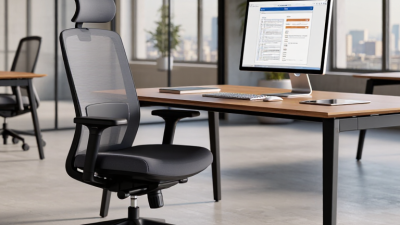
Who Are the Top Back Chair Suppliers in China?

A Back Chair may look simple, but its comfort and durability depend on frame design, foam density, upholstery, and quality control. Buyers comparing Chinese suppliers need to assess these details alongside price, production capacity, and communication. Small differences matter.

Grand View Research estimated the global office furniture market at USD 54.09 billion in 2023 and forecast a 5.5% compound annual growth rate from 2024 to 2030. This figure covers office furniture broadly, not Back Chair products alone. It still signals a competitive market where buyers should request clear specifications, recent test records, and samples before making decisions. A polished product photo is not proof of consistent production.

This guide introduces notable Back Chair suppliers in China and explains what buyers should check when building a shortlist. It considers product range, manufacturing capabilities, customization, export experience, and documented quality processes. Supplier names are starting points, not a definitive ranking; capabilities can change, and public information may be incomplete. Verify factory details, sample quality, and delivery terms directly. Some comparisons will remain imperfect. That is worth acknowledging. A careful review of a chair’s joints, stitching, and adjustment mechanisms can reveal more than a catalogue claim.
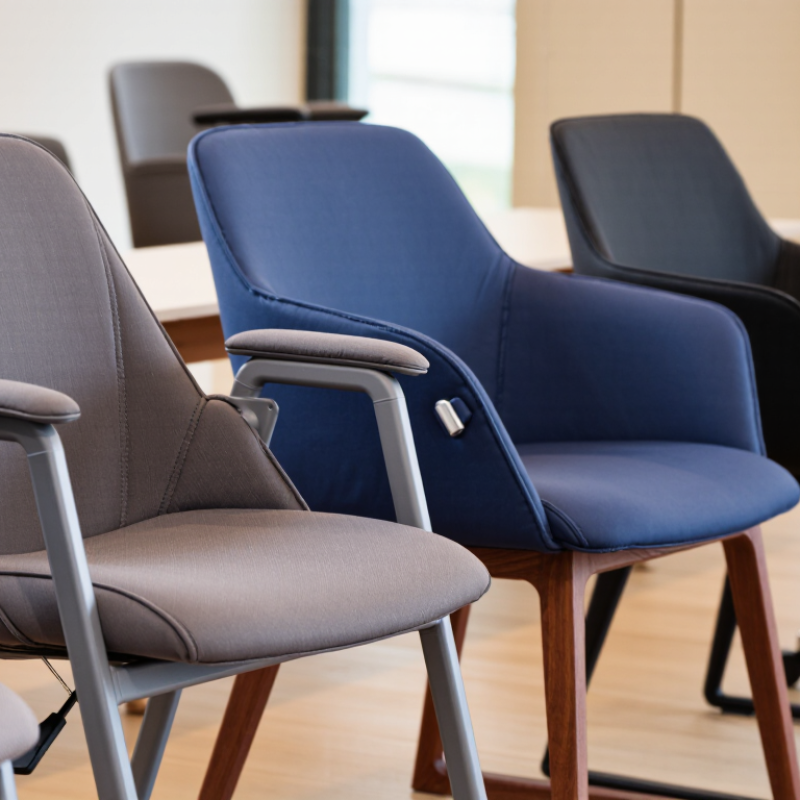
Who Are the Top Back Chair Suppliers in China?

What Defines a Back Chair and Its Key Ergonomic Components?

A back chair is a chair designed to support the torso while a person sits. Its backrest should follow the body’s natural shape, rather than force the spine into one fixed position. A useful design often includes lumbar support near the lower back, a seat that supports the thighs, and enough adjustment for different users. Fit matters. The best chair is not simply the one with the most controls; each adjustment should be easy to understand and hold its position during normal use.

Key ergonomic components work together. A contoured backrest can spread contact across the upper and lower back, while a gently rounded seat edge may reduce pressure behind the knees. Seat height should let the feet rest flat, with knees near hip level. Adjustable armrests can help the shoulders relax, but poorly placed ones may push the user forward. Breathable upholstery and a stable base also matter during long work sessions. Small details count.

Tips: When assessing a chair, sit in it for several minutes and test the lumbar area, recline, and controls. Check whether your feet stay grounded and your shoulders remain relaxed. Ask how adjustments are maintained over time. Measurements help, but they do not tell the whole story. Even a well-designed chair may feel wrong for a particular body, so treat comfort as something to verify, not assume.

How Large Is China’s Furniture Industry? NBS Reports RMB 655.7 Billion in 2023

China’s furniture industry recorded RMB 655.7 billion in revenue in 2023, according to the National Bureau of Statistics. The figure covers furniture manufacturers above designated size, not every workshop or small supplier. That distinction matters. It gives buyers a useful view of the formal manufacturing sector, but it does not reveal how much revenue came from chair backs alone.

For buyers comparing back chair suppliers, the industry scale signals broad production capacity, not guaranteed quality. Ask for material specifications, sample approval, and inspection records. A curved plywood back, for example, should hold its shape and show smooth edges after finishing. Check how the supplier controls moisture, adhesive application, and upholstery tension. Small defects can become obvious across a large order. Lead times and packaging also deserve attention, especially when chair backs travel separately from frames. The national revenue figure offers context, but supplier-level evidence is more useful for a purchasing decision. And the data has limits: revenue says little about defect rates, delivery consistency, or a factory’s response when a sample fails. Buyers should verify those details directly.

Which Chinese Chair Suppliers Merit Comparison: Henglin, UE, Sunon, and Anji Makers?

Chinese chair suppliers are not interchangeable. Compare them by product focus, production capacity, and documentation—not by catalog photos alone. Some established groups offer broad office-chair ranges and coordinated export support. Others concentrate on ergonomic designs, contract projects, or manufacturing clusters with many smaller workshops. These differences affect lead times, customization, and consistency. Details matter.

For a fair comparison, request the same chair specifications from each supplier: backrest material, lumbar adjustment, seat dimensions, base construction, and stated load rating. Ask for sample availability, inspection procedures, and current production lead times. A smooth video call is useful, but it cannot replace checking a physical sample. Look closely at stitching, adjustment controls, and whether the chair remains stable on an uneven floor.

Anji-area makers may offer flexible sourcing across different price levels, while larger manufacturers may provide more structured product and quality documentation. Neither profile guarantees a better result. Verify claims against recent samples and written specifications. Compare quoted prices only after confirming what they include, such as packaging, spare parts, and customization. Supplier information can be incomplete, and a low quote may hide important differences. That deserves a second look.

Who Are the Top Back Chair Suppliers in China? — A Practical Comparison Framework
Comparison Dimension What to Compare Evidence to Request Why It Matters
Backrest design Backrest height, shape, support zones, recline function, and available adjustment options. Dimensioned drawings, product specifications, adjustment range, and sample-unit inspection. Confirms whether the chair fits the intended users, work setting, and product requirements.
Materials and construction Backrest frame material, upholstery or mesh, cushioning, joints, and finish. Material specifications, component list, finish samples, and documented inspection criteria. Material choice affects comfort, appearance, durability, maintenance, and product consistency.
Safety and performance testing Applicable tests for strength, stability, durability, and intended chair use. Current test reports identifying the tested model, test standard, laboratory, and report date. Depending on the destination market and product, relevant standards may include EN 1335 or ANSI/BIFMA X5.1. A report should match the offered model; a general certificate alone does not establish that a specific chair passed a specific test.
Quality management Production inspection process, defect handling, traceability, and quality-system certification. Inspection plan, sample inspection records, corrective-action process, and certification documents where applicable. Helps assess how consistently the supplier controls production and responds to quality issues.
Customization Available changes to dimensions, materials, colors, components, packaging, or labeling. Written customization scope, approved samples, tooling requirements, and confirmation of any design-related testing impact. Clarifies which options are feasible and which changes may require additional validation or cost.
Order terms Minimum order quantity, sample availability, production lead time, payment terms, and quotation validity. A dated quotation and order schedule stating quantities, specifications, delivery terms, and exclusions. These terms vary by supplier and order; compare written quotations rather than relying on informal estimates.
Export and packaging Export experience for the destination market, packaging method, carton dimensions, and shipping marks. Packaging specification, carton measurements, packing photos, and destination-specific compliance documents where required. Supports shipping-cost estimates and helps reduce transit damage and documentation gaps.
Warranty and after-sales Warranty period, covered components, exclusions, spare-parts availability, and claim procedure. Written warranty terms, parts list, service contact, and response procedure. Clear terms make post-delivery support easier to evaluate and compare.

How QB/T 2280-2016 Sets Performance Requirements for Office Chairs

QB/T 2280-2016 Sets Performance Requirements for Office Chairs

QB/T 2280-2016 is China’s light-industry standard for office chairs. It specifies requirements and test methods covering dimensions, appearance, safety, and mechanical performance. For buyers comparing back chairs, this gives a practical basis for checking whether a chair’s backrest and frame withstand expected use. Tests may assess stability, strength, and durability under defined conditions. Details matter. A supplier’s test report should identify the tested model, because similar-looking chairs can use different frames, joints, and materials.

The market context is substantial: Grand View Research estimated the global office furniture market at USD 63.9 billion in 2023. That scale makes clear product documentation especially useful, though market growth alone says nothing about an individual chair’s quality. Ask suppliers for a QB/T 2280-2016 test report from a qualified laboratory, and check its date and model number. Also inspect the backrest in person: uneven stitching, loose connections, or a flexing support can reveal issues a brochure misses. Compliance is useful, but it does not guarantee comfort for every body or workday.

Tips: Match the report to the exact chair configuration, including its base and backrest. Request the tested load and cycle conditions, rather than relying only on a “passed” claim.

How to Verify Suppliers Using China’s 2023 Furniture Export Data (China Customs)

China’s 2023 furniture export data can provide a useful first check when assessing back chair suppliers. Begin with the relevant HS classification: seats fall under heading 9401, but the correct subheading can vary by materials and construction.

Not a perfect match.

China Customs statistics can show export trends by product category, destination, and period, but they may not identify individual factories. Compare a supplier’s claimed export history with available official figures, then request supporting records, such as dated invoices, shipping documents, and product specifications. Check that the chair type, shipment dates, and destination markets make sense together.

Be cautious with databases that claim to show company-level customs records; confirm their source, coverage, and update dates. Ask the supplier to explain any large mismatch. It may have a reasonable cause, such as trading through an export agent, but verify it. Export data shows activity, not chair quality. Request recent production photos, inspection records, and a factory visit or live video walkthrough. A few gaps are normal; vague answers deserve follow-up.